Evolta Go
UI/UX Design, Branding · Website & App
Apr 2021 – Dec 2021
Overview
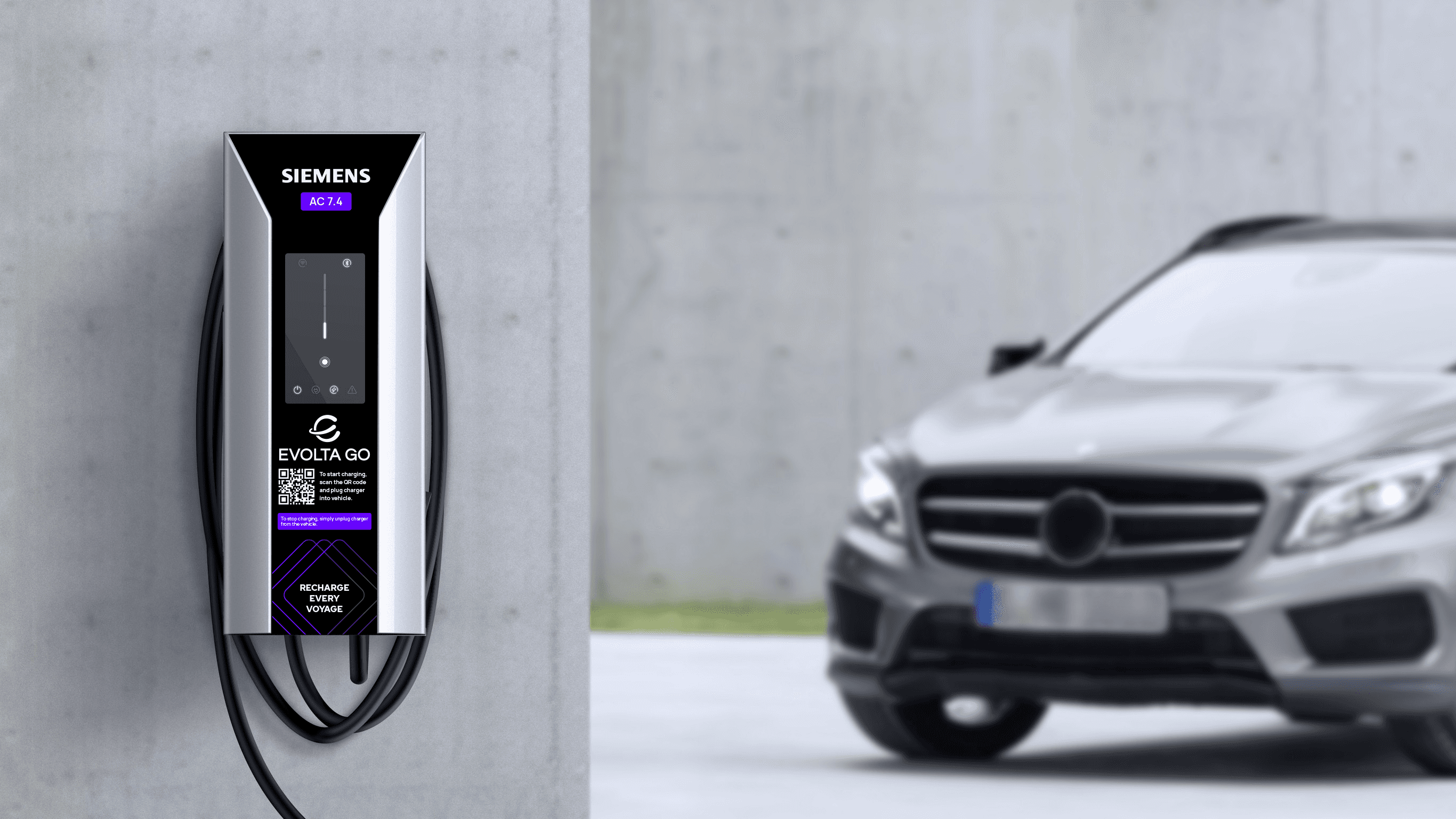
Evolta Go is a Singapore-based EV charging startup providing an integrated ecosystem of charging hardware and a mobile application.
With no existing digital product or established brand, the project required building a cohesive experience from the ground up — translating a technical offering into a clear, accessible product for both businesses and end-users.
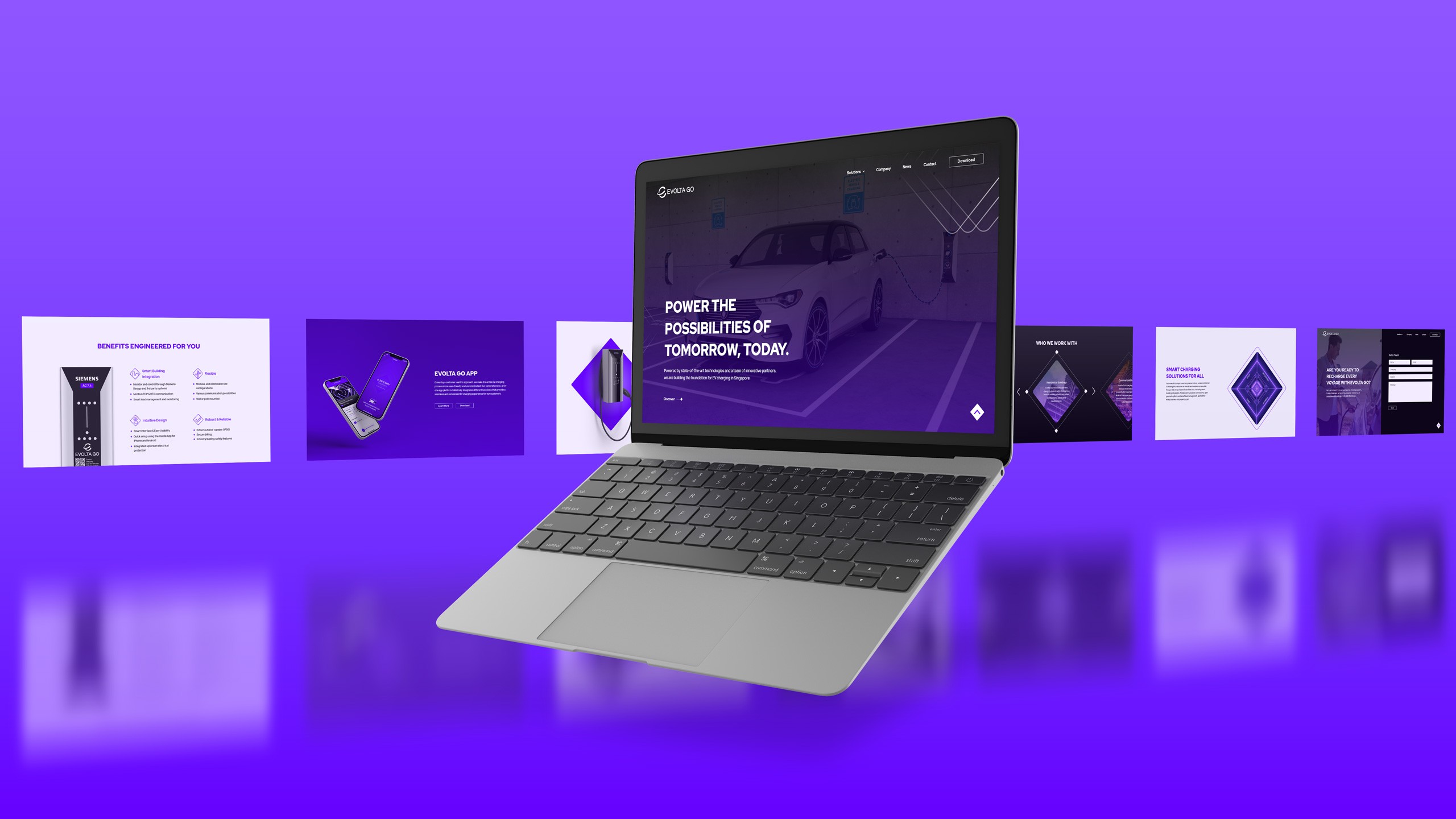
The website focuses on communicating Evolta Go’s value proposition, supporting partnership acquisition, and guiding users toward key actions such as app adoption and support. Complementing this, the mobile app enables users to discover nearby charging stations, manage charging sessions, and handle payments through an integrated e-wallet.
I was responsible for the end-to-end website design, developed the brand and logo direction, and contributed to the mobile app UI.
Team
Designers
Developers
My Role
Brand & Logo Development
Website UX & UI Design
Mobile App UI Design (partial)
Prototyping
Developer Handoff
The Challenge
As a new EV startup, Evolta Go had no established brand or digital presence beyond a logo.
The challenge was to translate a highly technical charging system into a clear, accessible experience across both website and mobile platforms—while supporting both business and user needs.
Key challenges included:
Defining a clear brand and digital experience from scratch
Communicating a technical product in a simple and accessible way
Balancing marketing goals (partnerships and acquisition) with product functionality (charging experience)
Ensuring consistency across website and mobile app touchpoints
Goals
To address the challenges, the project focused on:
Establishing a clear and cohesive brand presence across digital touchpoints
Designing a website that effectively communicates Evolta Go’s value proposition and supports partnership acquisition
Creating a structured and intuitive information architecture to simplify complex technical content
Translating technical charging workflows into clear, user-friendly app experiences
Ensuring a consistent experience between website and mobile app
Understanding the Problem Space
Initial project direction was informed by internal stakeholder discussions with the managing director and business development team.
These sessions provided insights into:
Business vision, goals, and long-term direction
Target audience, market positioning, and competitors
Strengths and gaps in the existing brand and offerings
Opportunities for differentiation within the EV charging space
These inputs helped shape early design decisions, particularly in defining the brand direction, structuring website content, and aligning the experience with both business and user needs.
Website Design
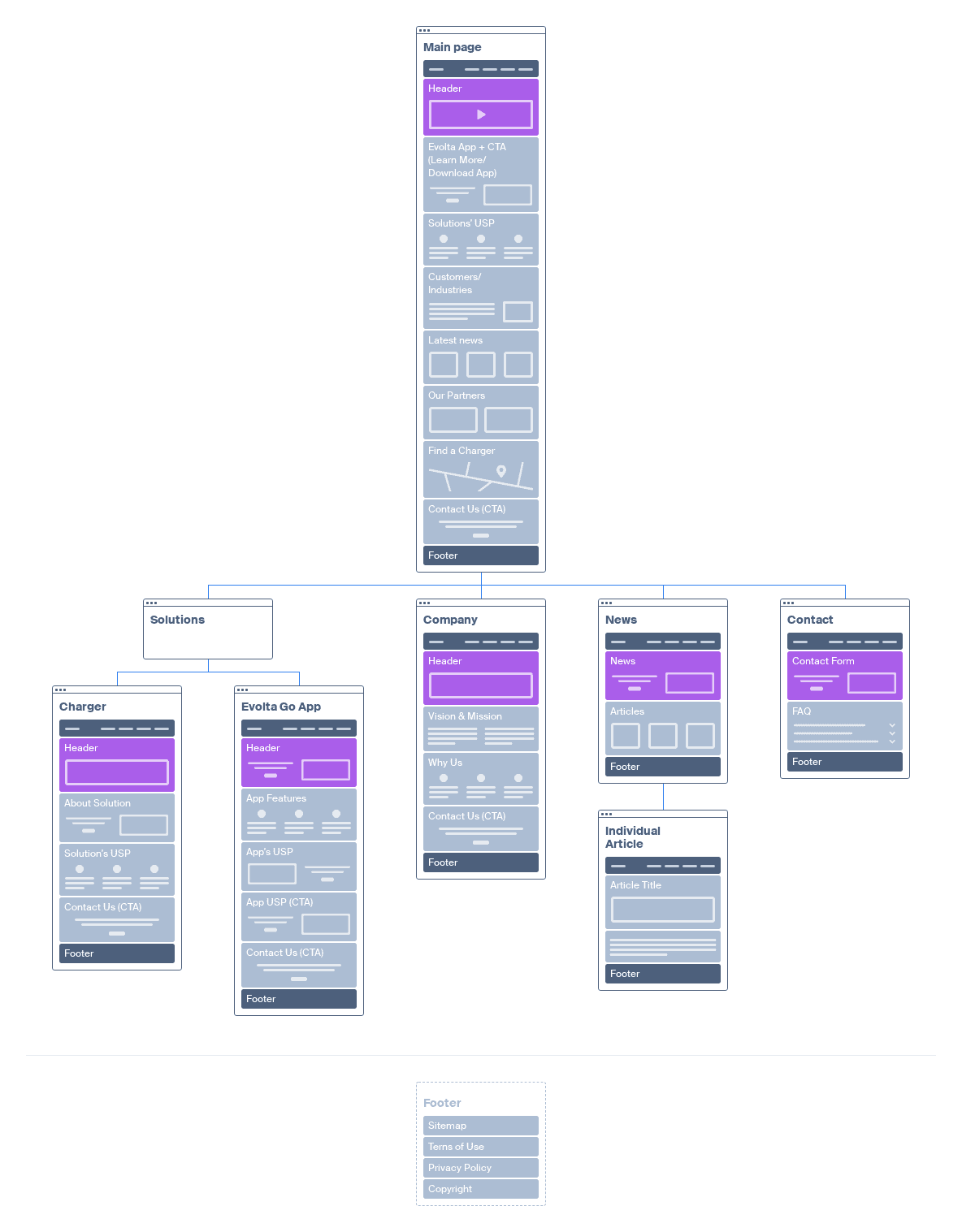
Information Architecture
Based on stakeholder inputs and business goals, the website needed to serve multiple purposes — introducing Evolta Go, communicating its value proposition, and supporting partnership enquiries.
I structured the site to balance marketing content with functional clarity, ensuring users could quickly understand the offering while accessing key actions such as exploring solutions or getting in touch.
The architecture was organised into:
a main landing page to communicate the brand and product ecosystem
solution-specific pages (e.g. charger, app) to provide deeper details
supporting pages such as company, news, and contact
This structure aimed to guide users from awareness → understanding → action in a clear and intuitive flow.
Design Direction & Exploration (Moodboard)
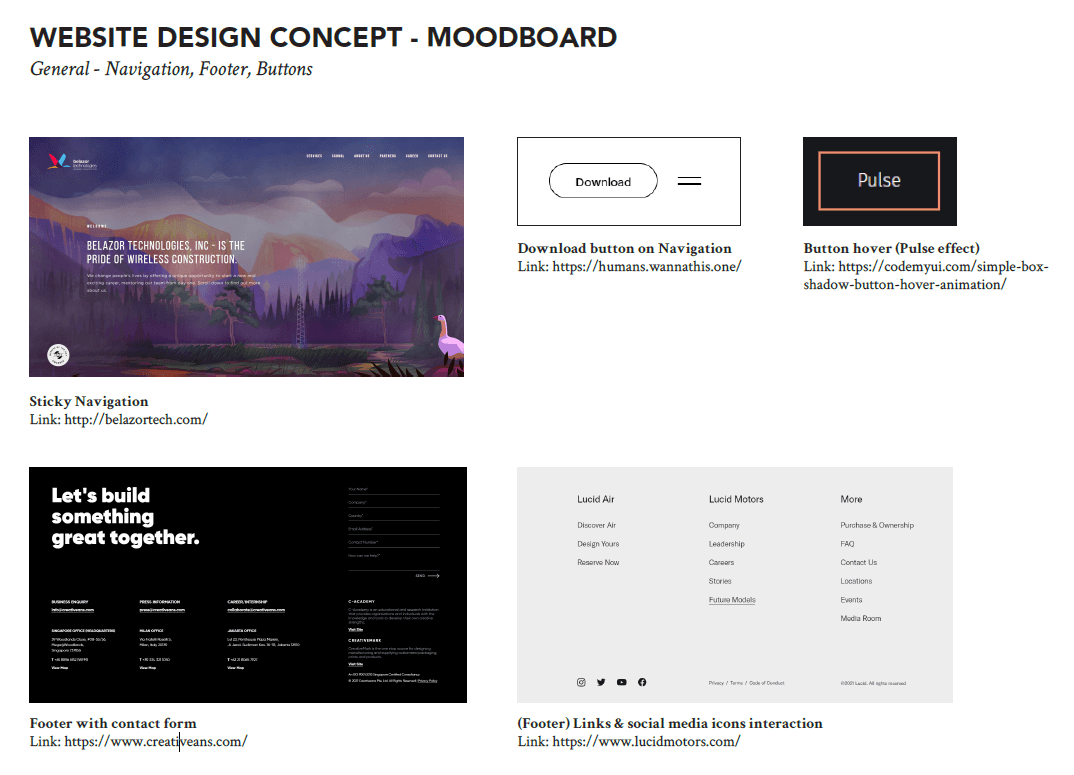
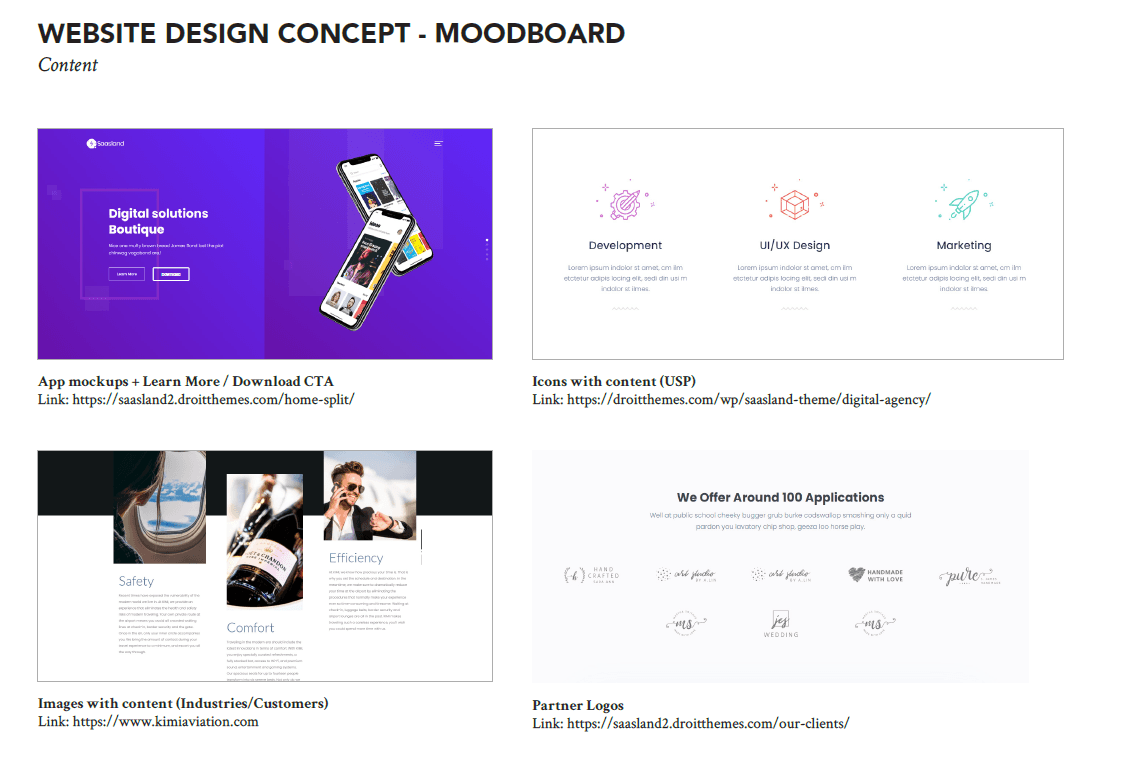
To establish a clear visual direction for Evolta Go, I developed moodboards exploring layout patterns, interaction styles, and content presentation.
The goal was to define a design system that would:
communicate a modern and tech-forward brand
support clear content hierarchy for technical information
balance visual impact with usability
The exploration covered:
hero banner treatments and CTA placement
navigation and footer patterns
modular content sections for scalability
iconography and visual language for key messaging
These references helped guide the final design direction and ensure consistency across the website.
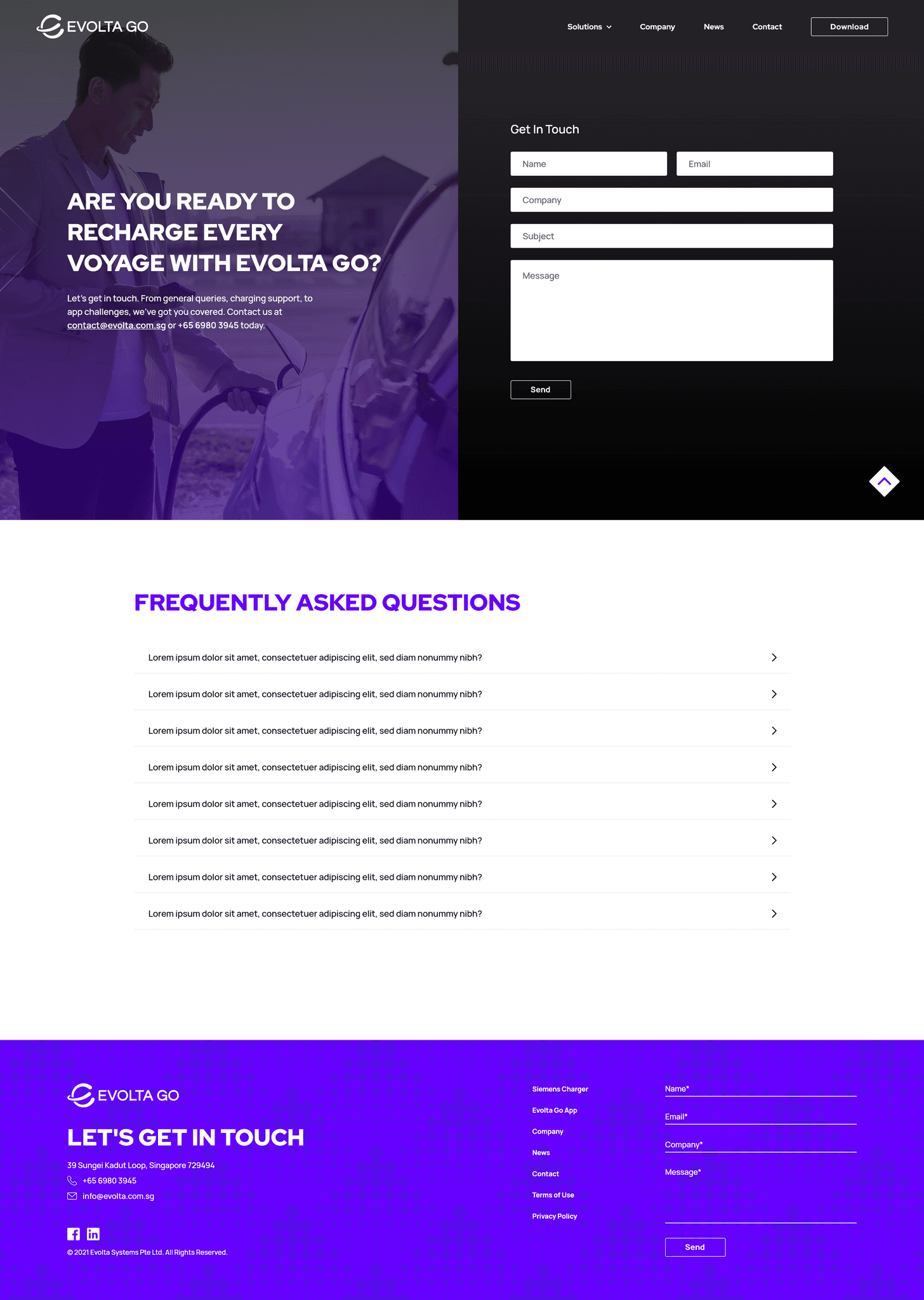
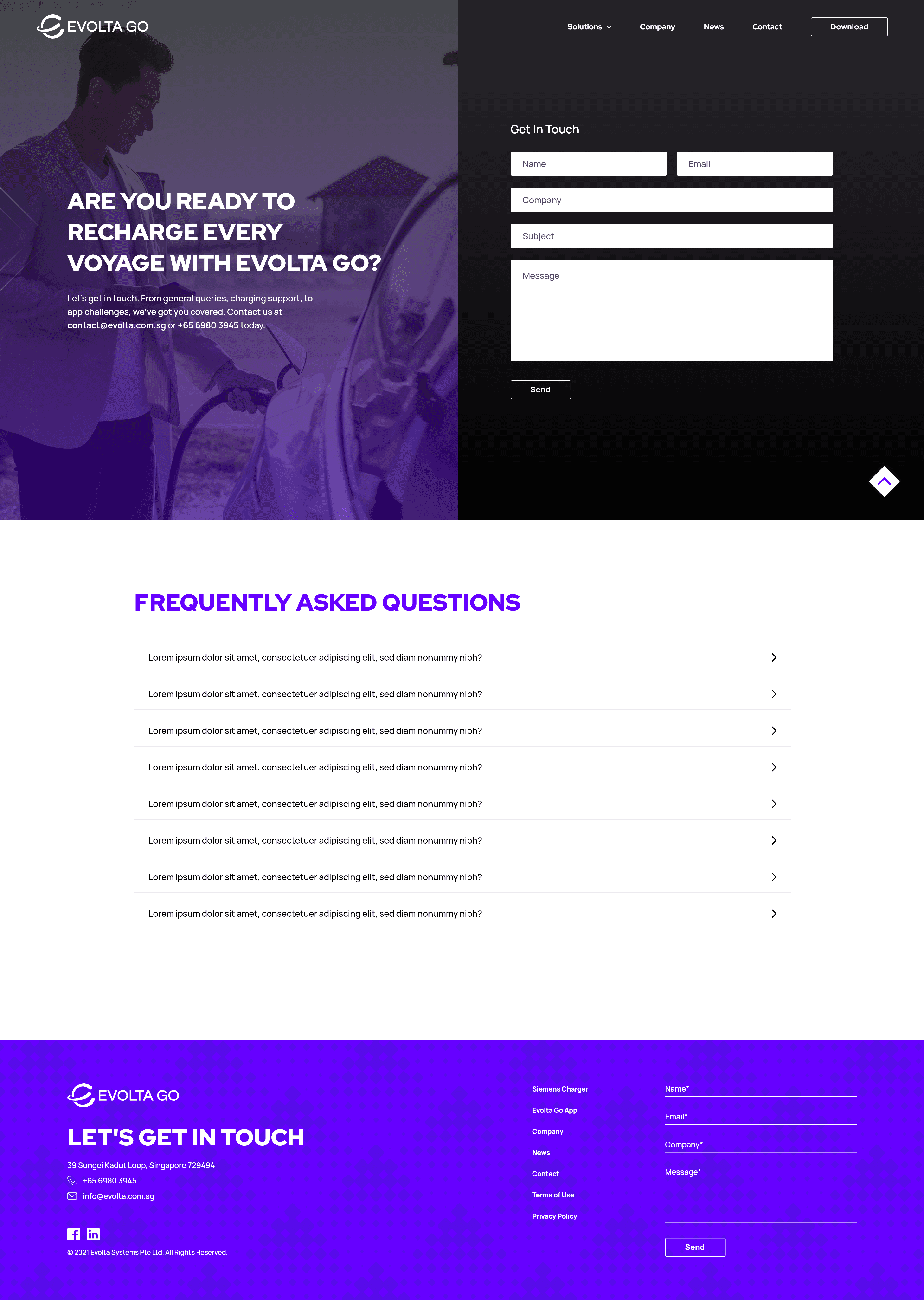
Final Website Design
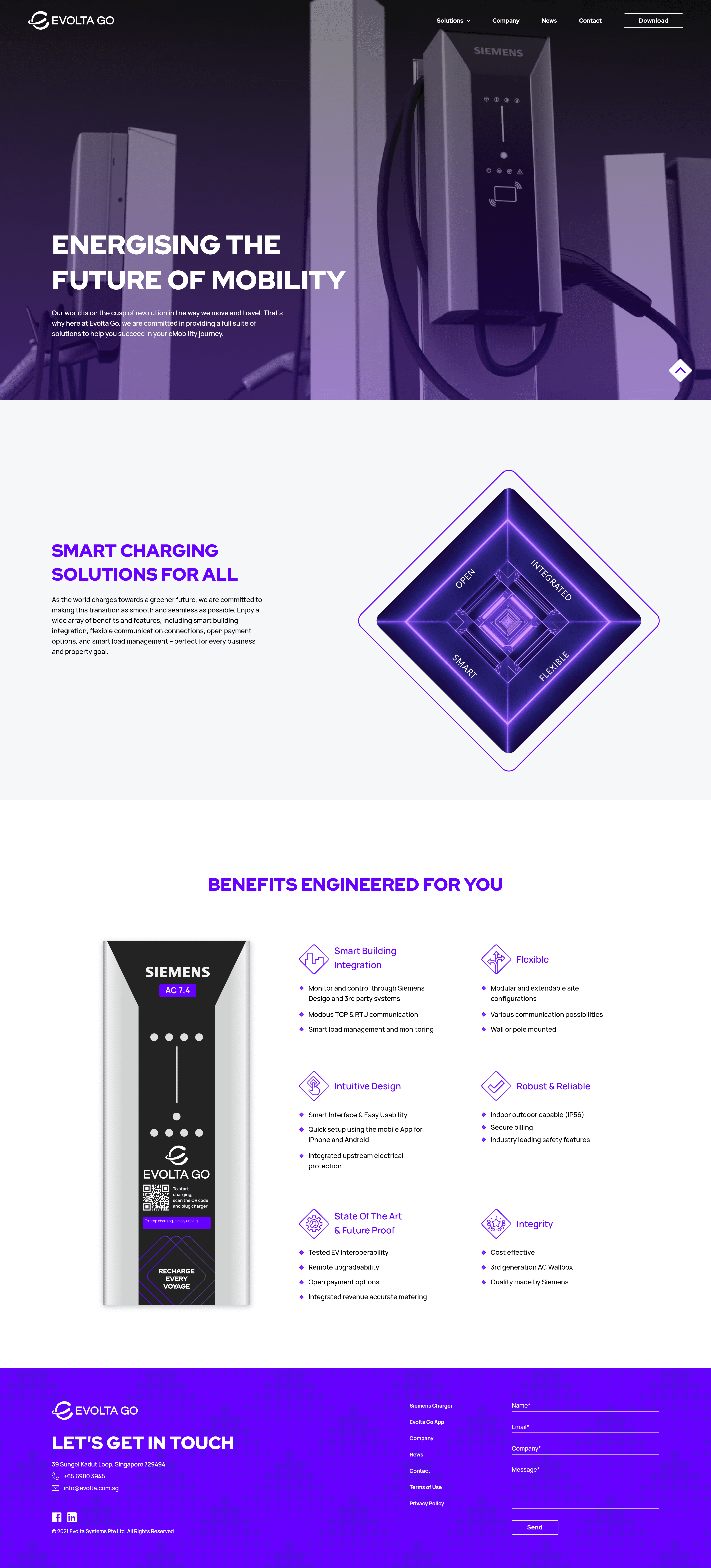
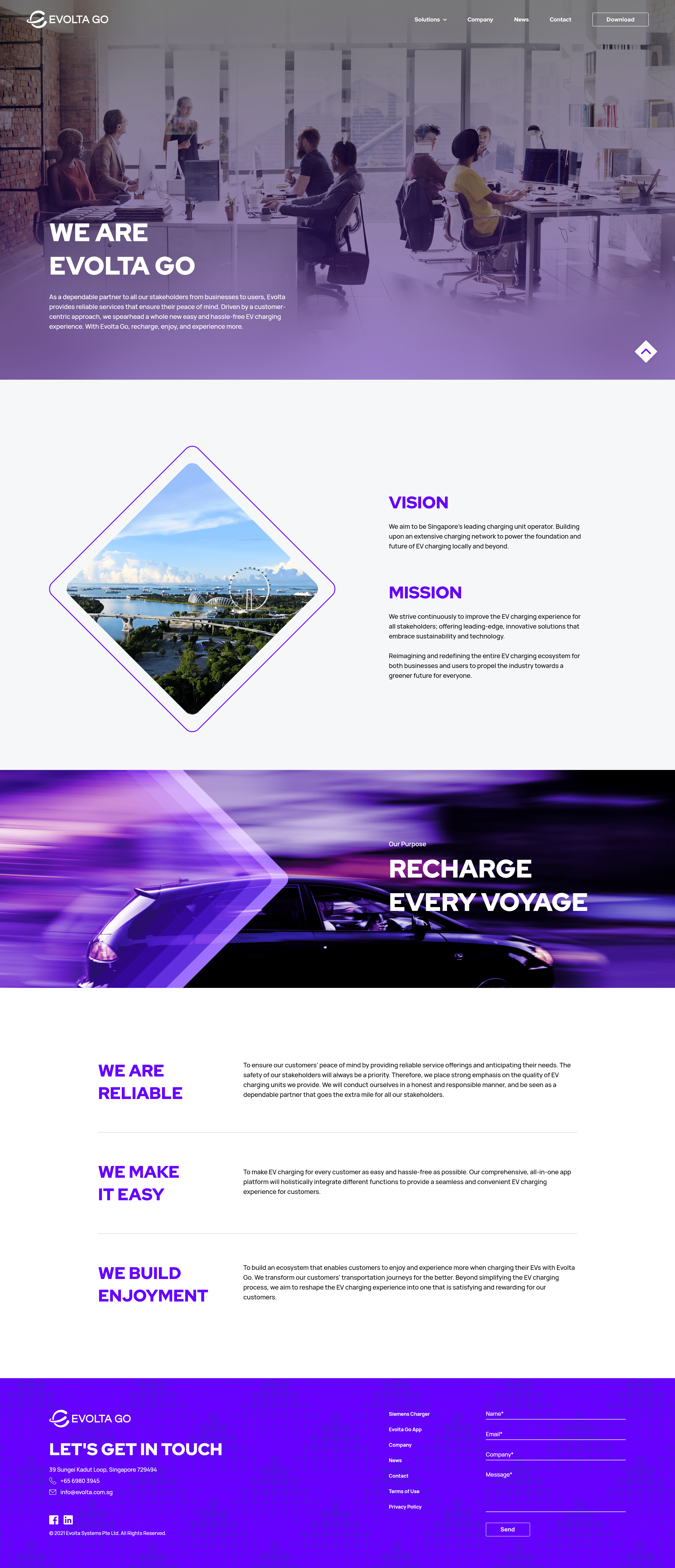
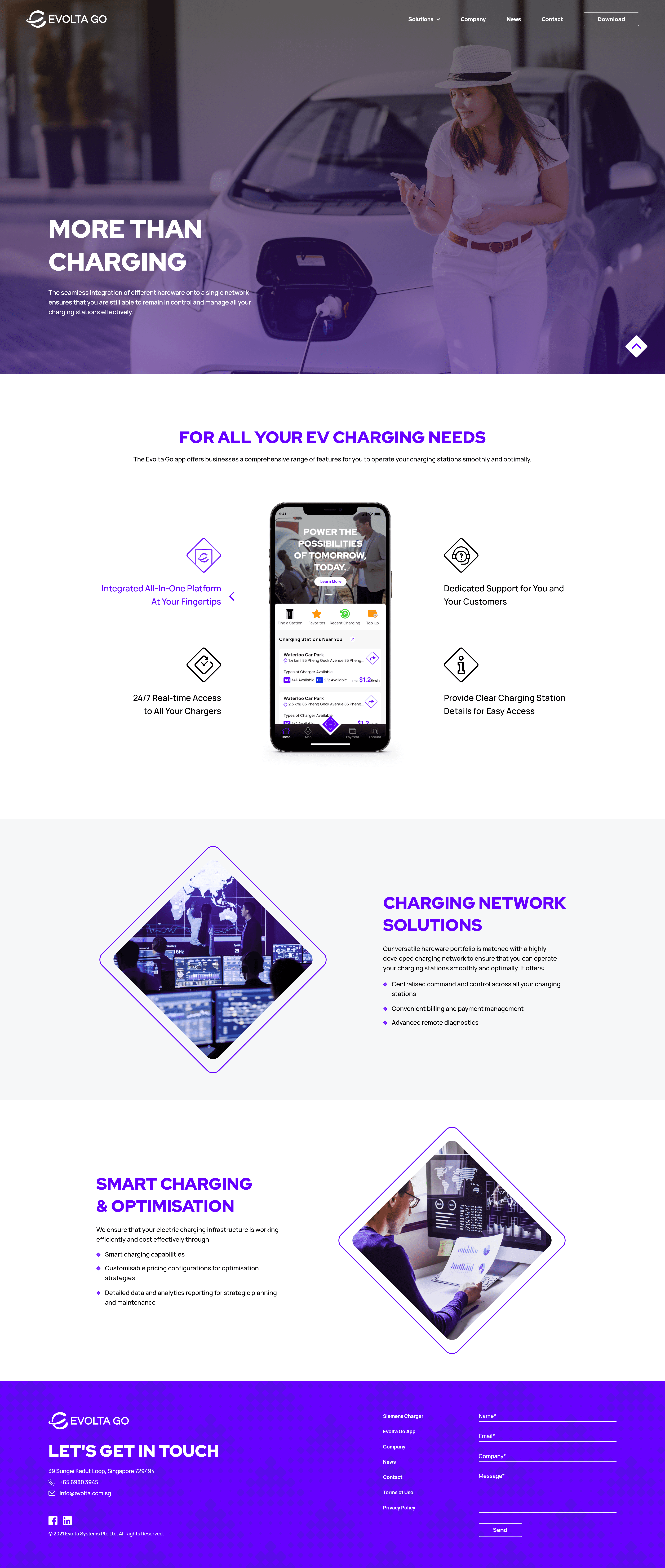
The final website translates Panda Century’s brand into a playful and engaging digital experience. Visual elements, illustrations, and layout were designed to reflect the brand’s emphasis on making Chinese learning interactive and enjoyable, while maintaining clear structure across content-heavy sections such as programmes and lessons.
App Design
Understanding Product Requirements
The app requirements were provided through internal documents outlining charging states, payment scenarios, and user flows. These served as a foundation for the design process, where I focused on translating defined product requirements into clear and usable interface designs.

Final App UI
Onboarding & Entry Flow
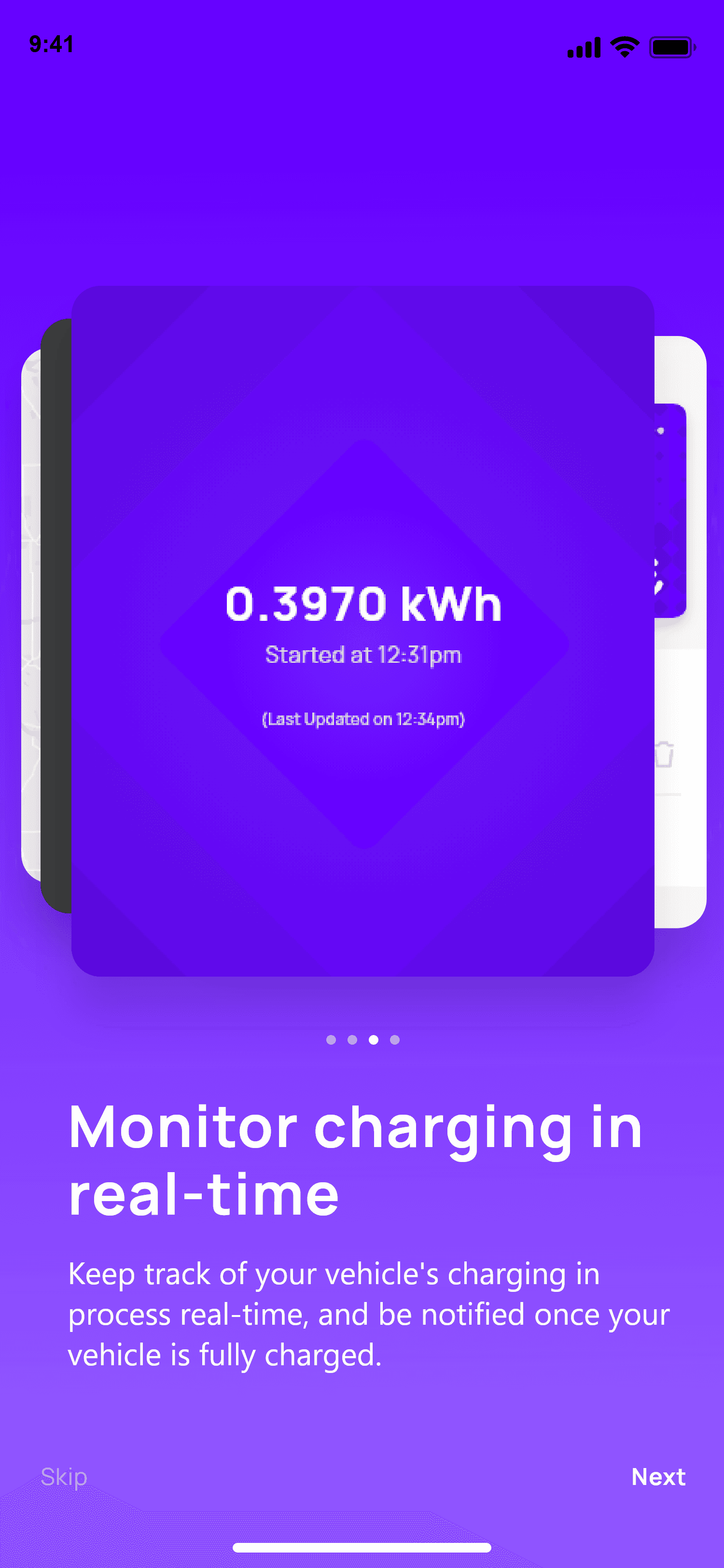
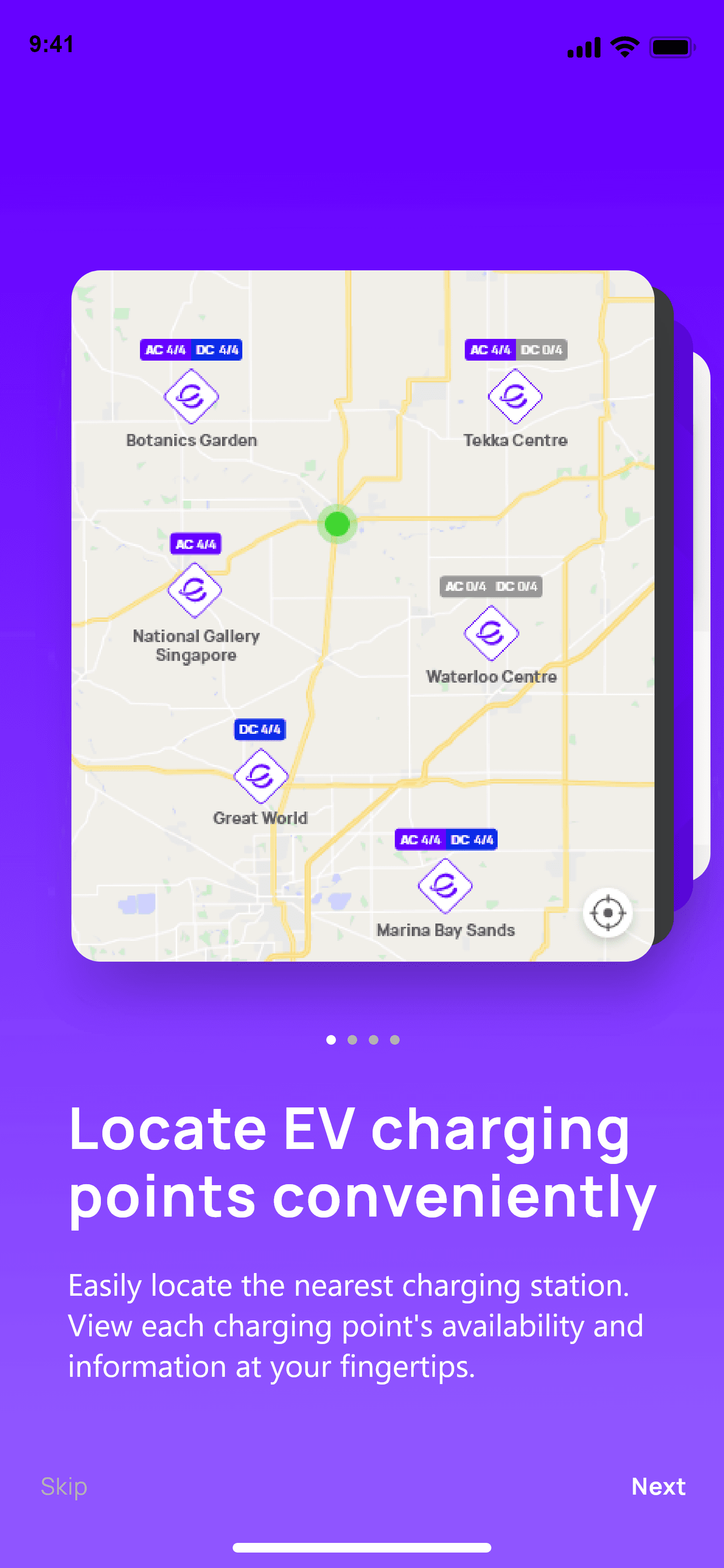
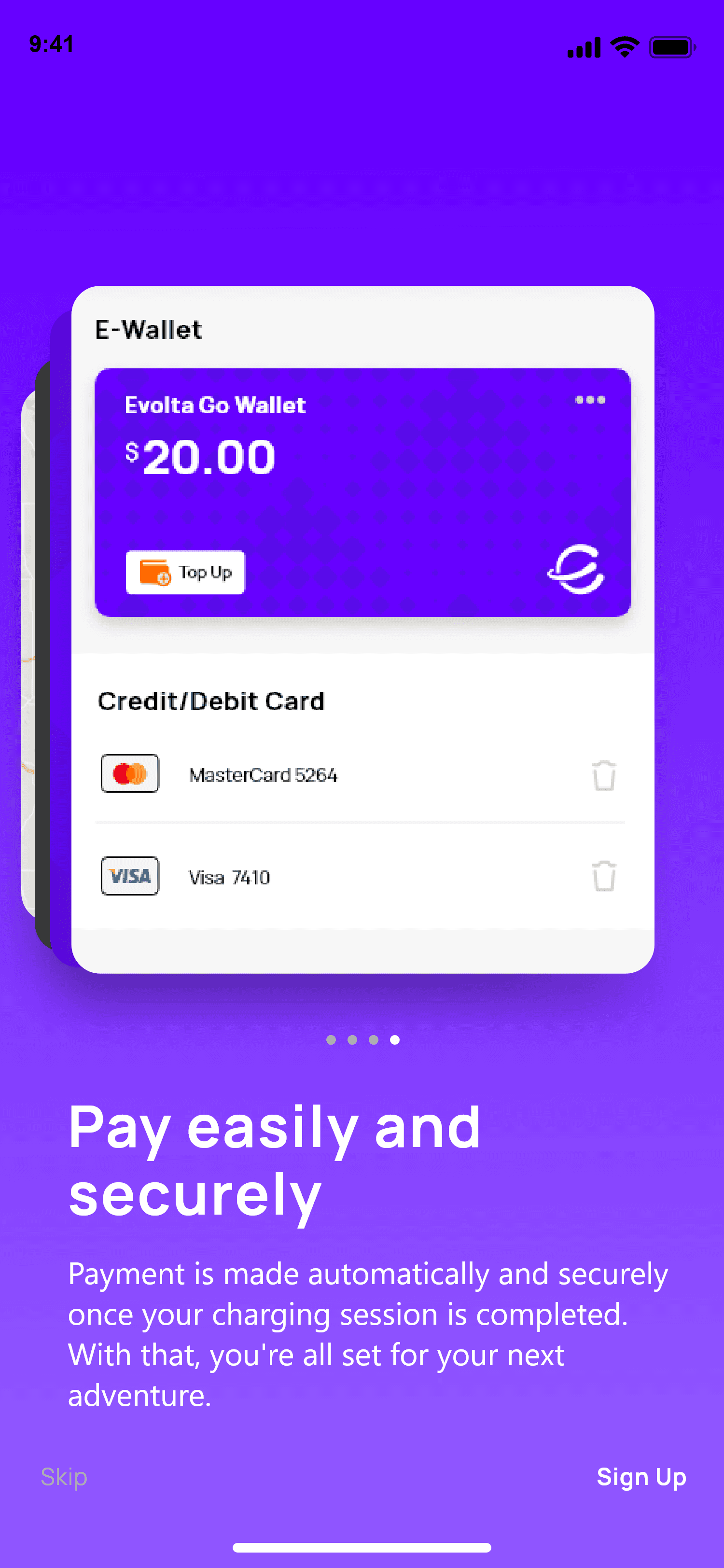
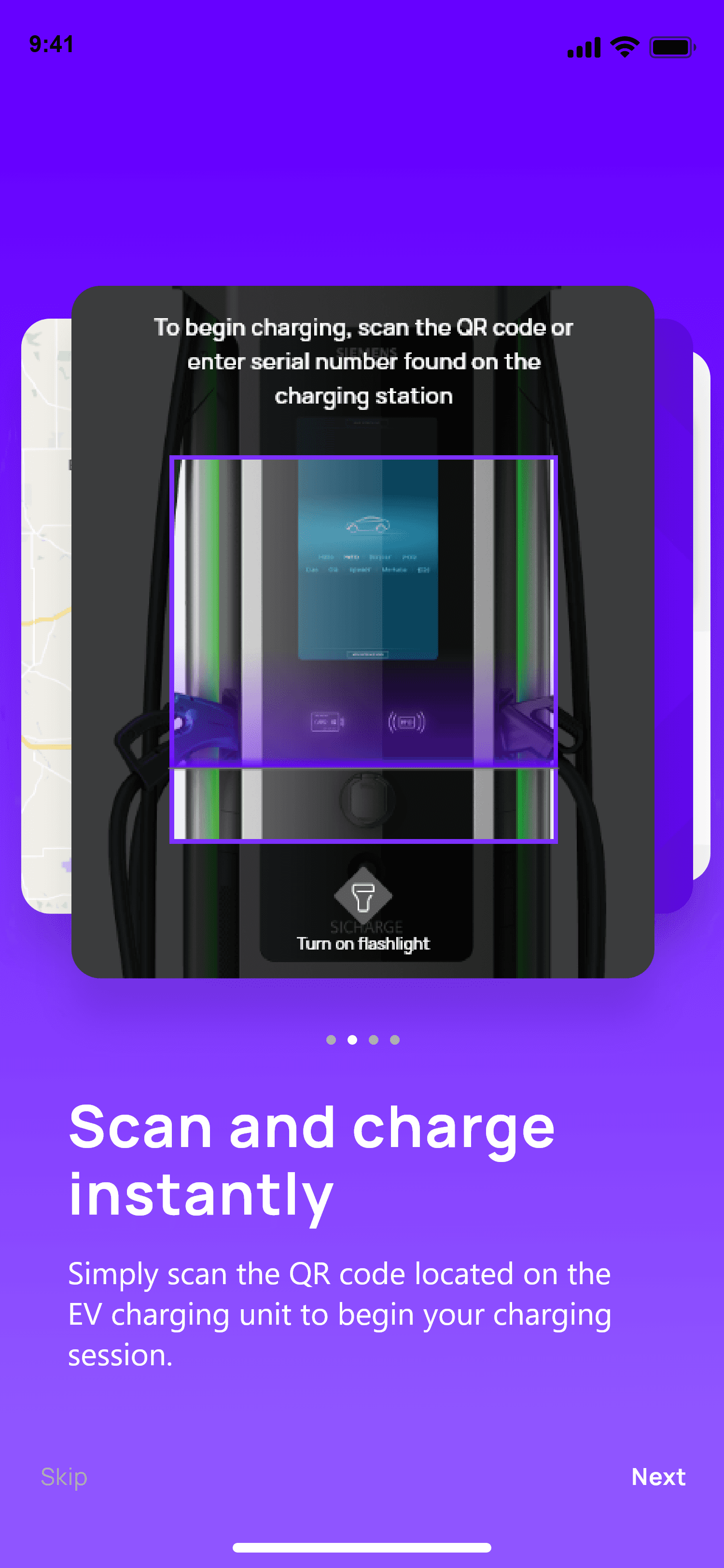
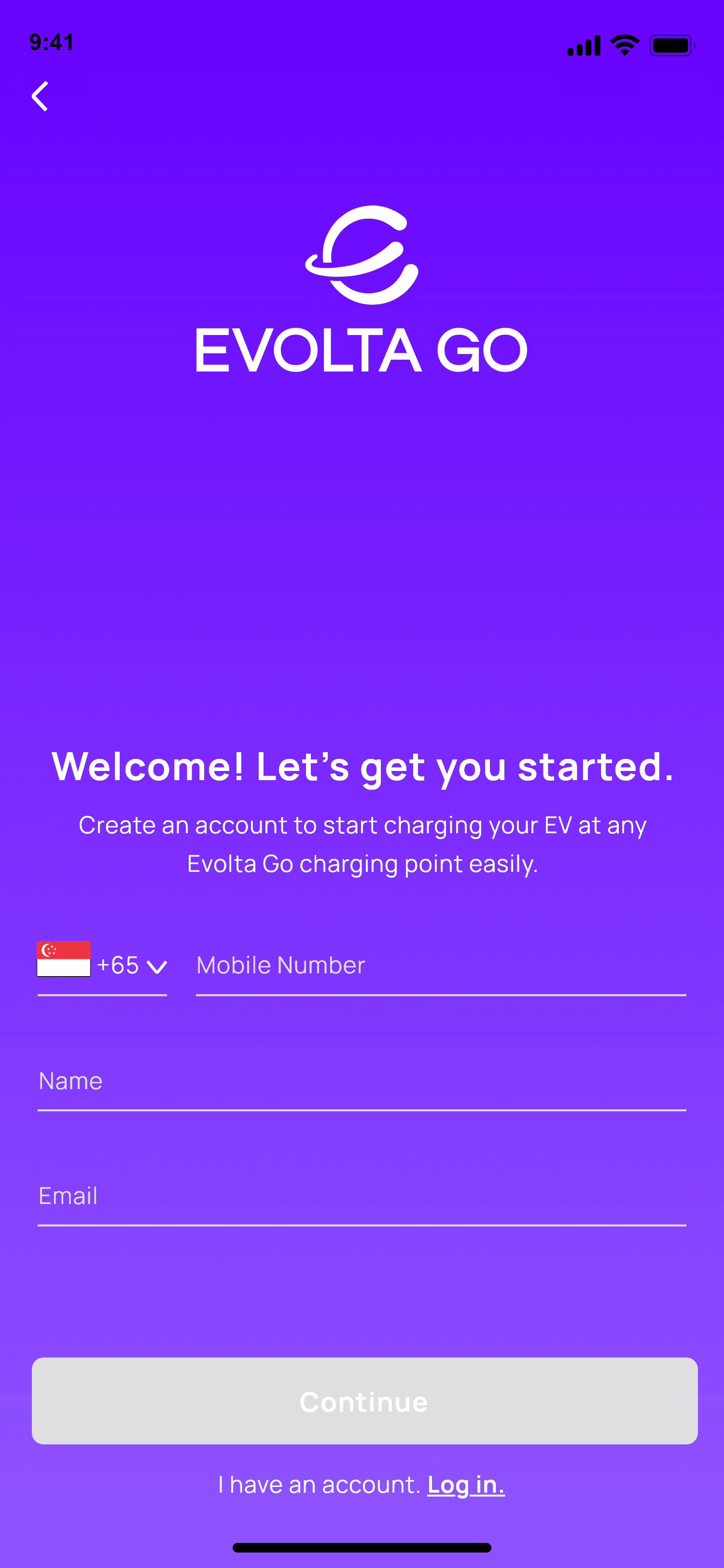
The onboarding screens introduce key features of the app, including locating charging stations, initiating charging, and monitoring sessions in real time. The design focuses on clear communication through visual hierarchy and concise messaging, helping new users quickly understand the core value of the product before entering the app.

Charging Flow
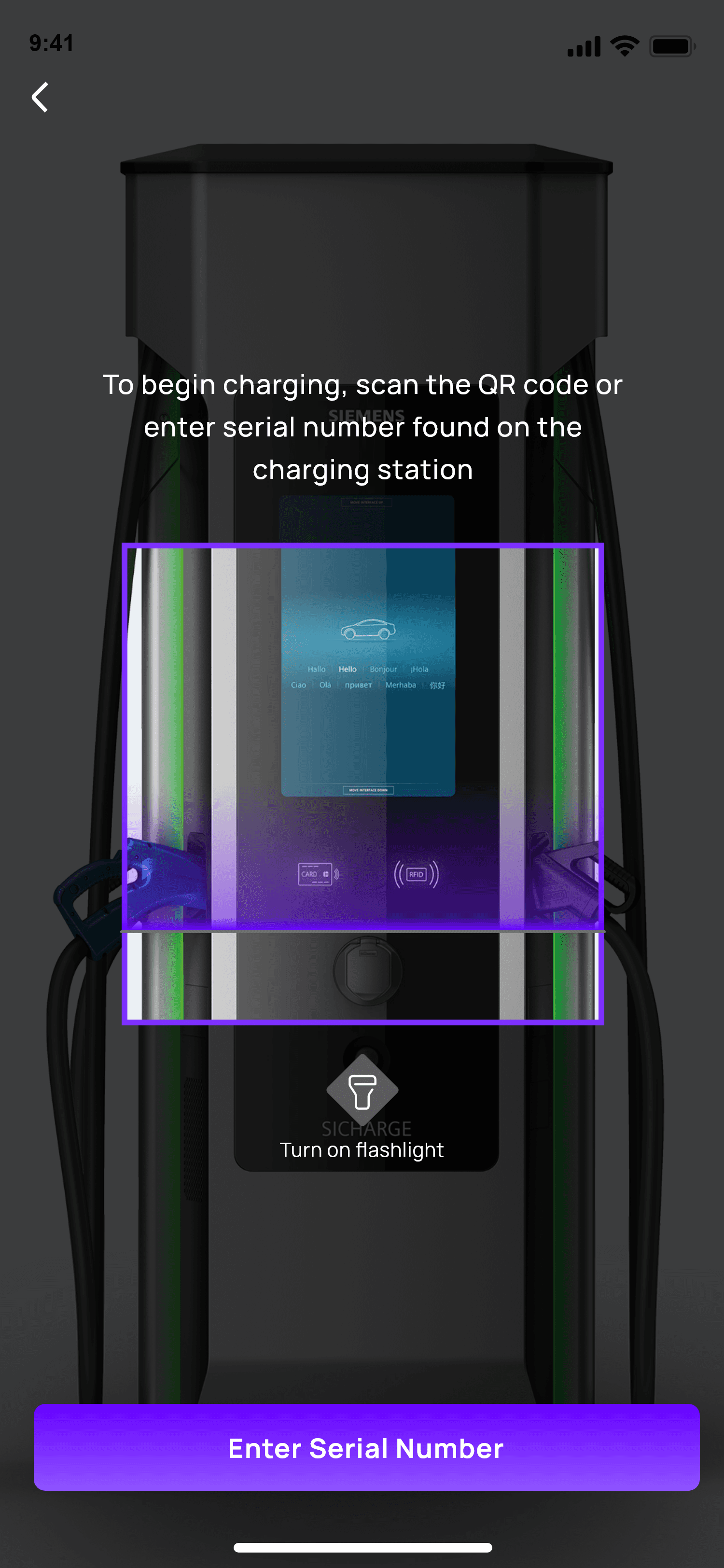
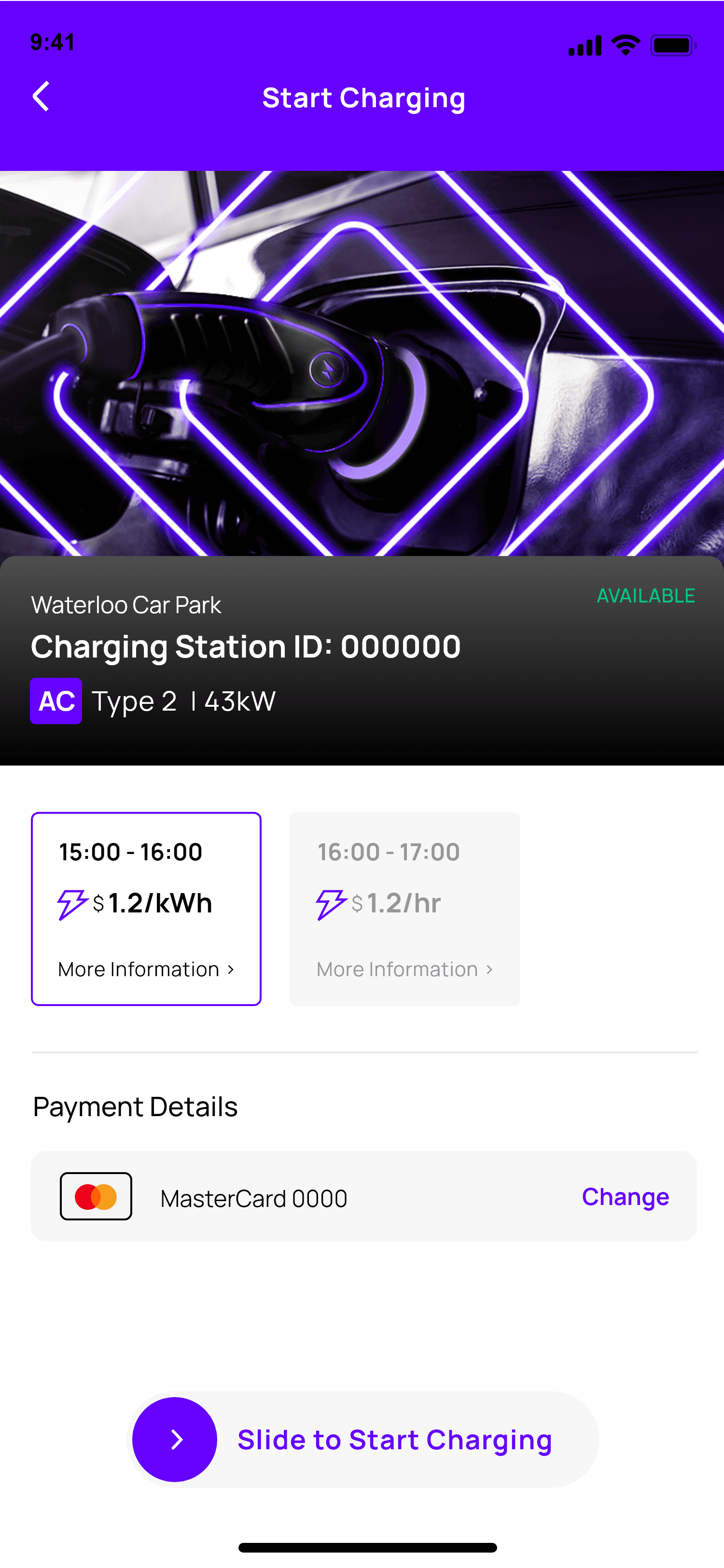
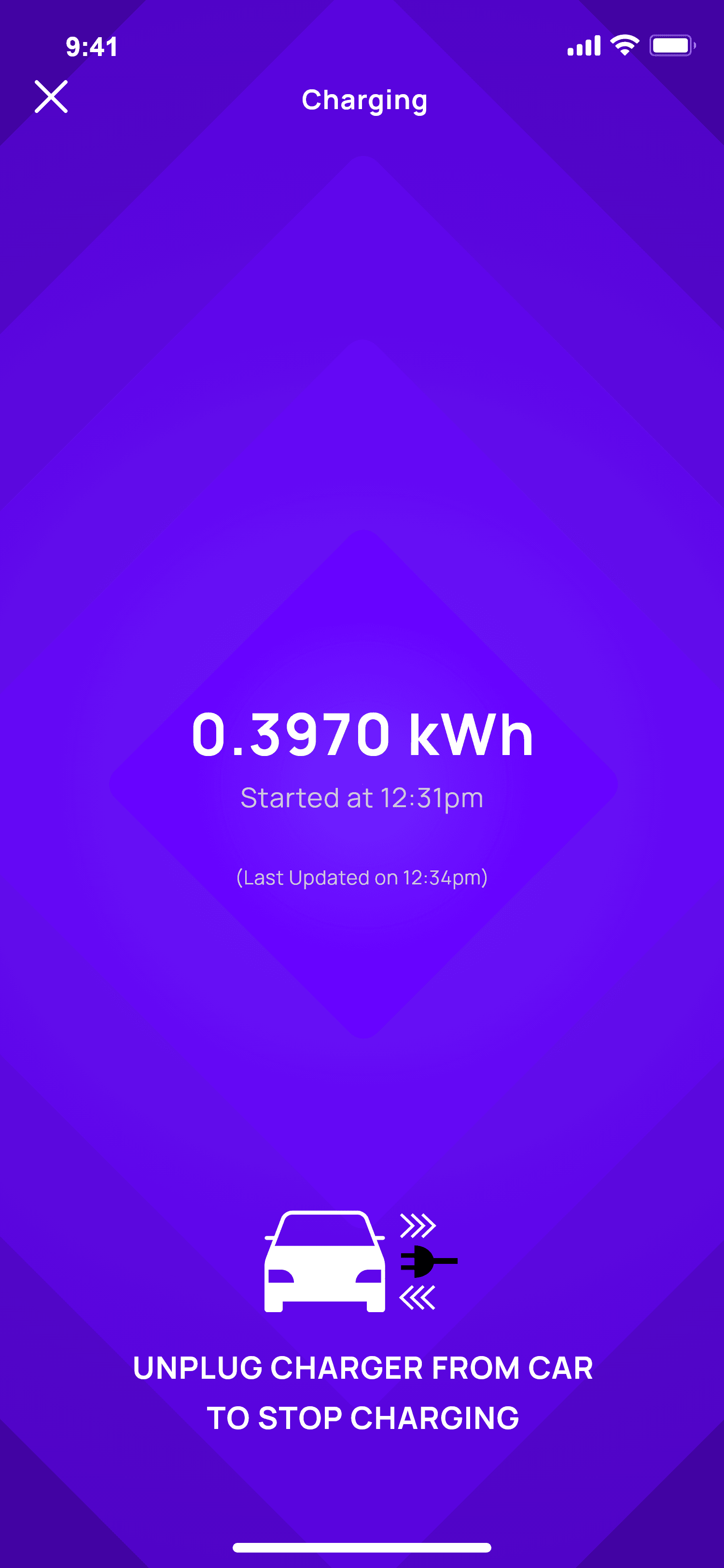
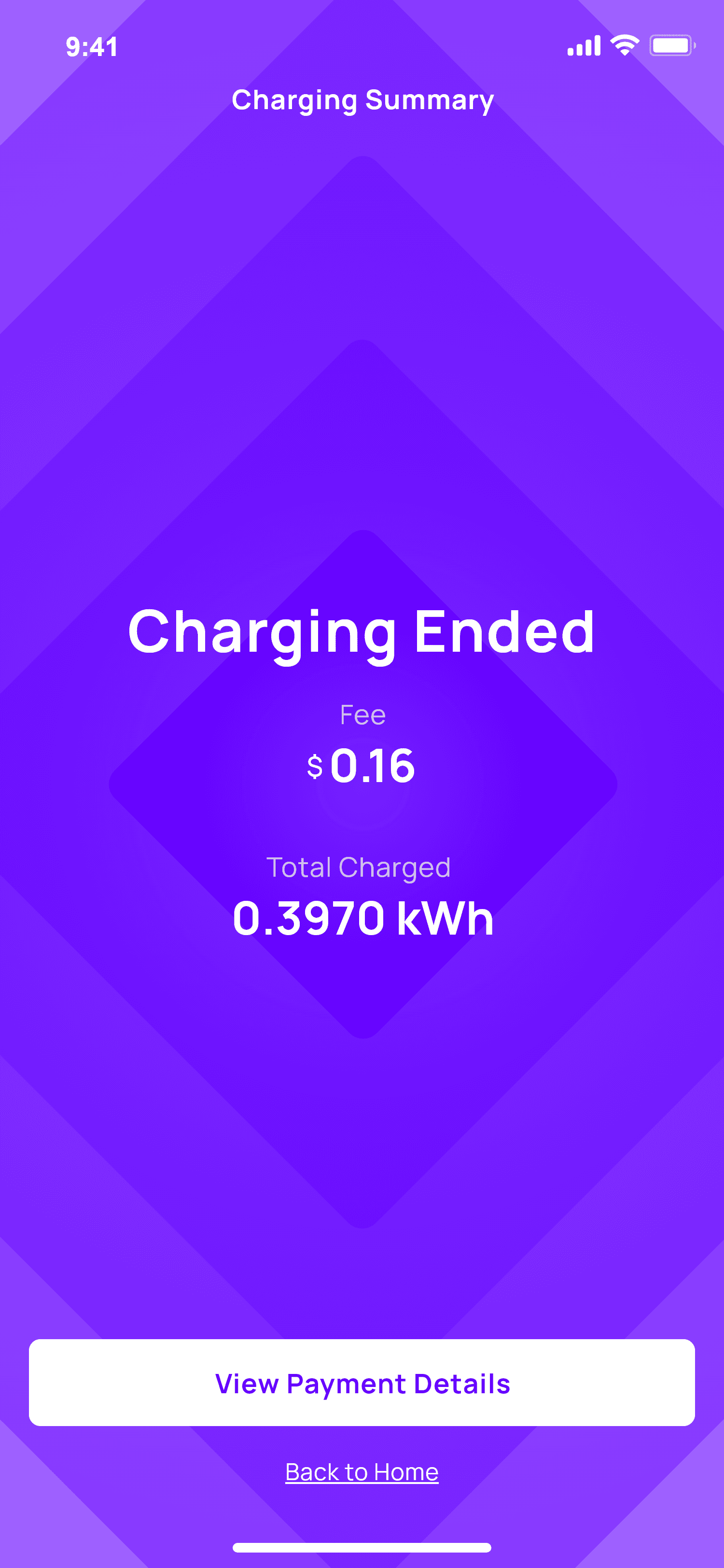
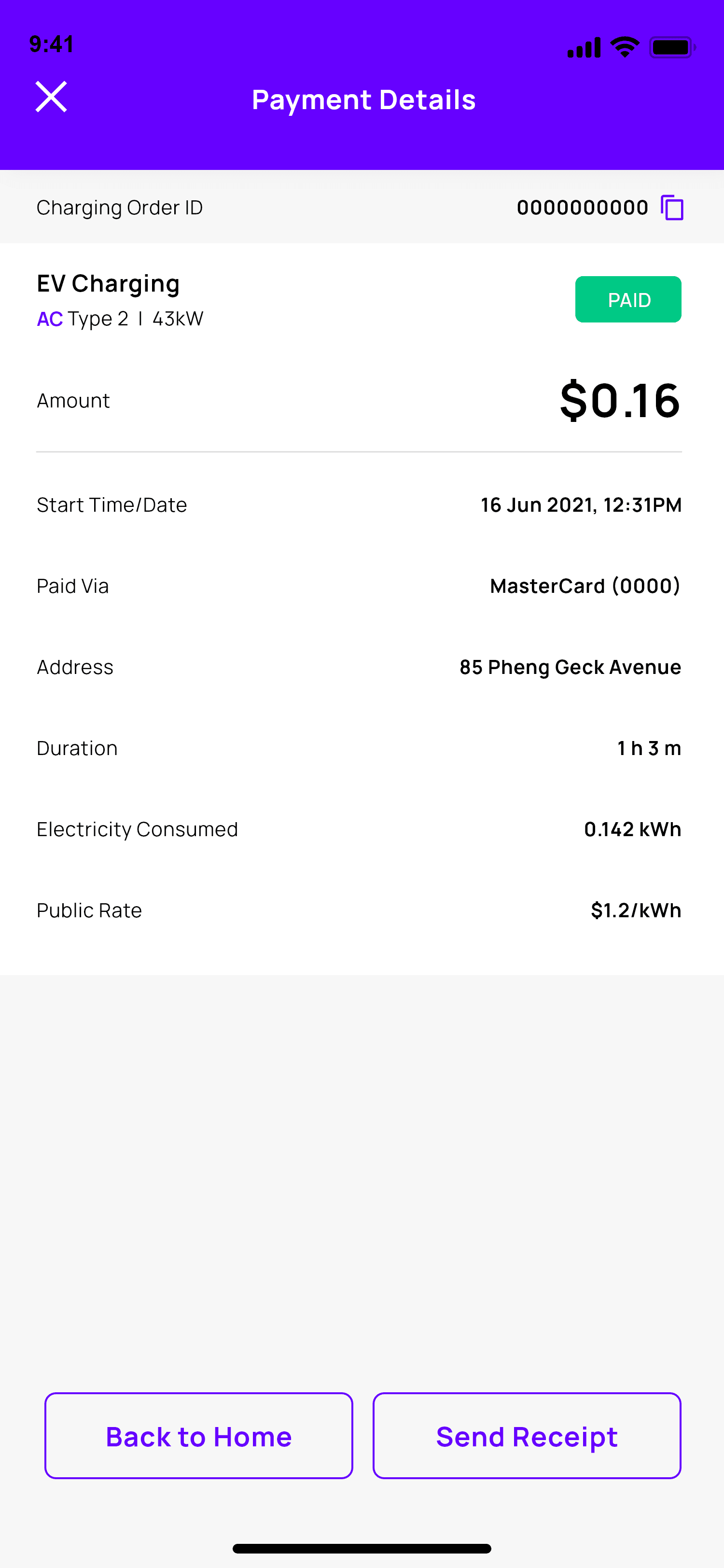
The charging experience was designed to guide users through a seamless end-to-end journey, from initiating a session to reviewing payment details.
Users can start charging by scanning a station QR code or manually entering a charger serial number, ensuring flexibility across different charging environments. Once a charger is selected, the interface presents key information such as location, availability, and selectable time slots before initiating the session.
For new users, a payment setup step is integrated into the flow to ensure a smooth transaction later. Charging is initiated through a clear “slide to charge” interaction, reducing accidental triggers while reinforcing user intent.
During the session, real-time feedback is provided, including charging status and energy consumption (kWh), helping users stay informed throughout the process. Upon unplugging, the system transitions into payment processing, followed by a detailed summary screen.
The summary and payment details screens provide transparency, displaying key information such as charging duration, location, energy usage, and total cost, ensuring users have full visibility over their transaction.
Discovery Flow
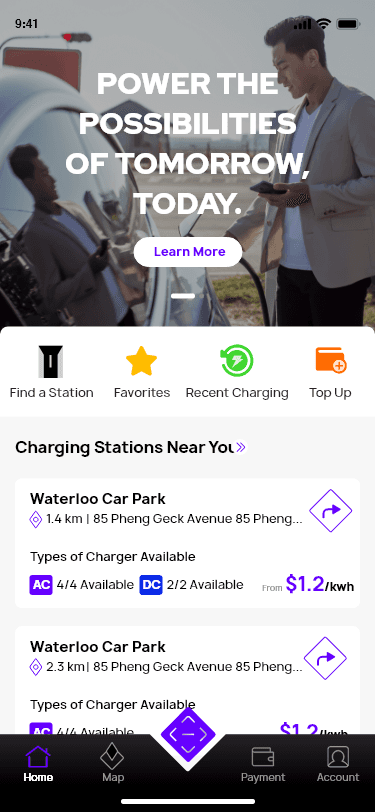
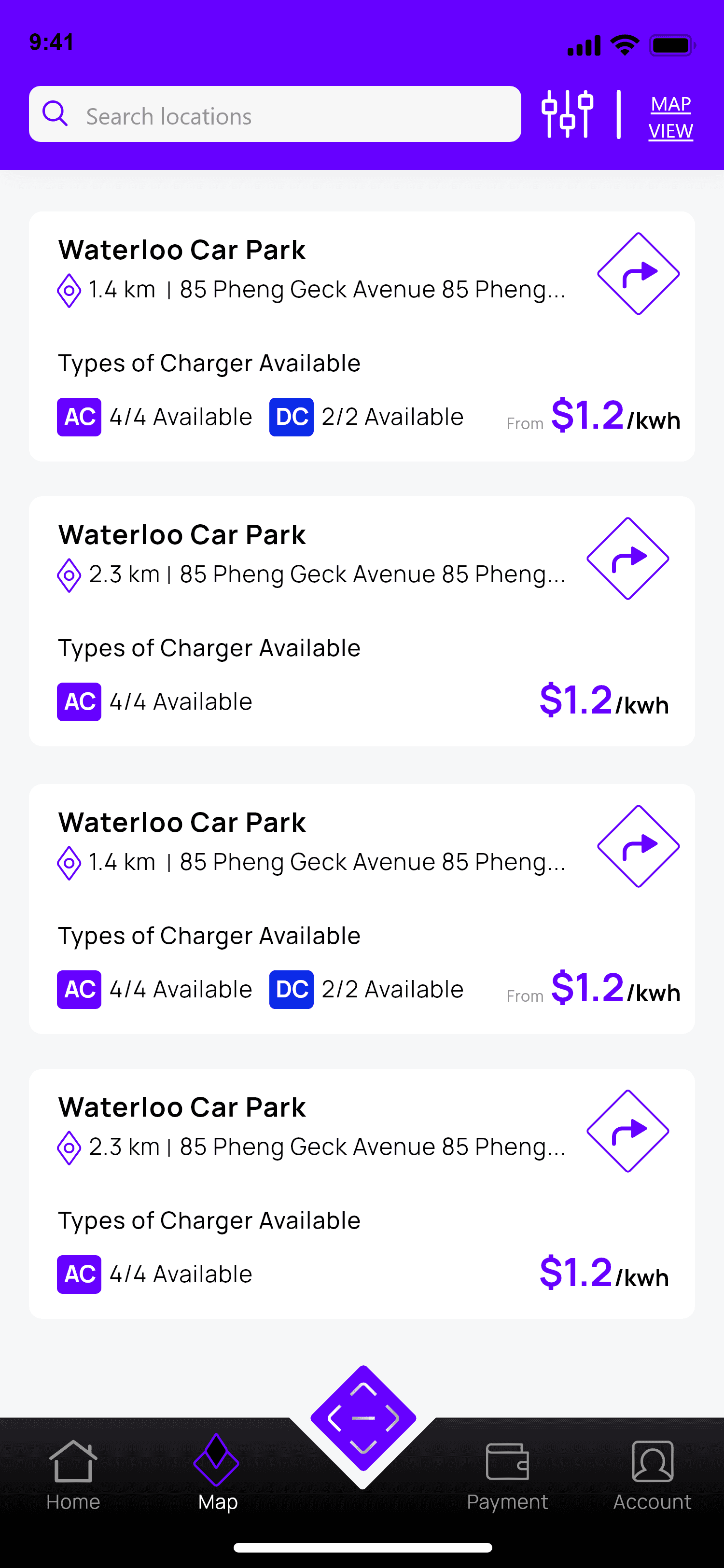
The discovery experience was designed to help users easily locate nearby charging stations based on their preferences and needs.
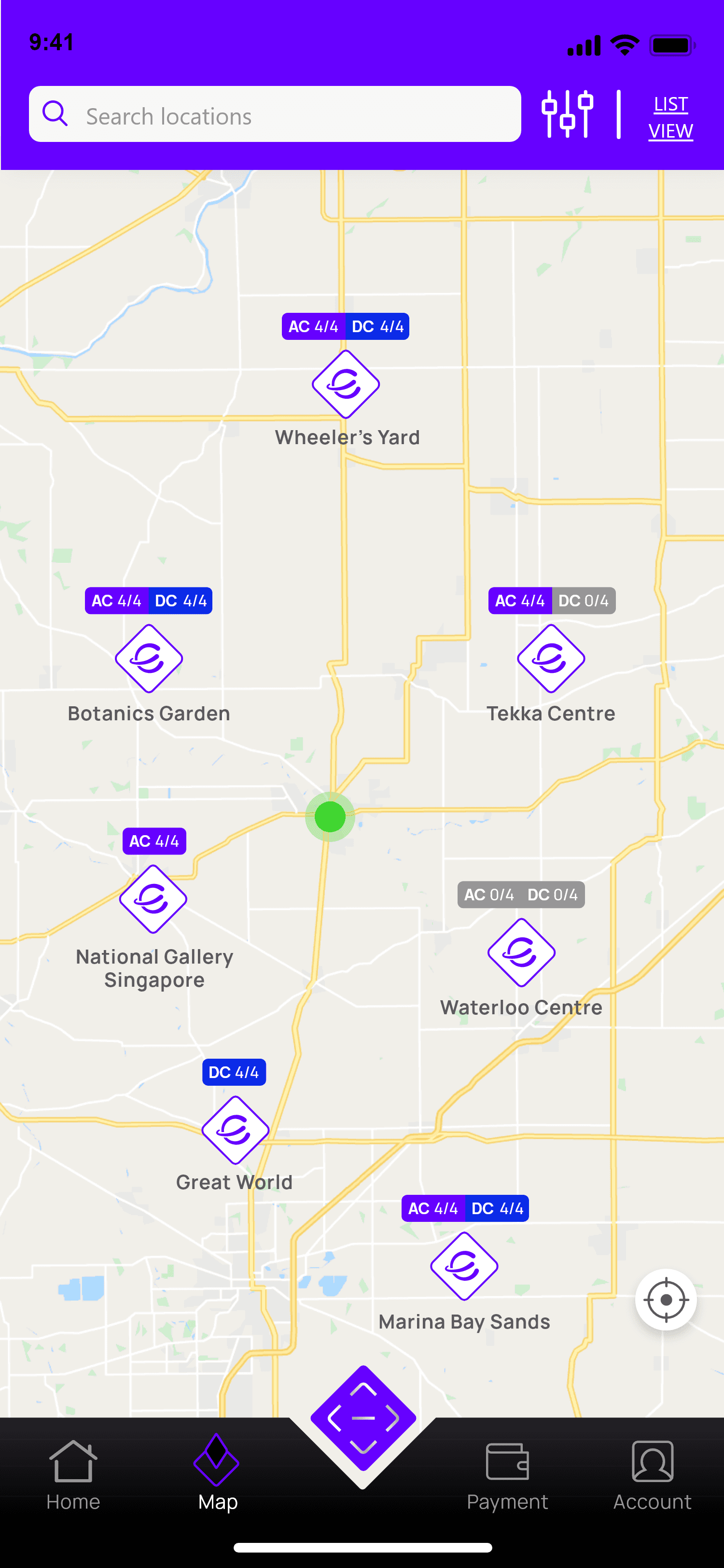
Users can explore stations through both map and list views, providing flexibility depending on their context. The map view allows for quick spatial awareness, while the list view presents structured information such as distance, charger type, and pricing for easier comparison.
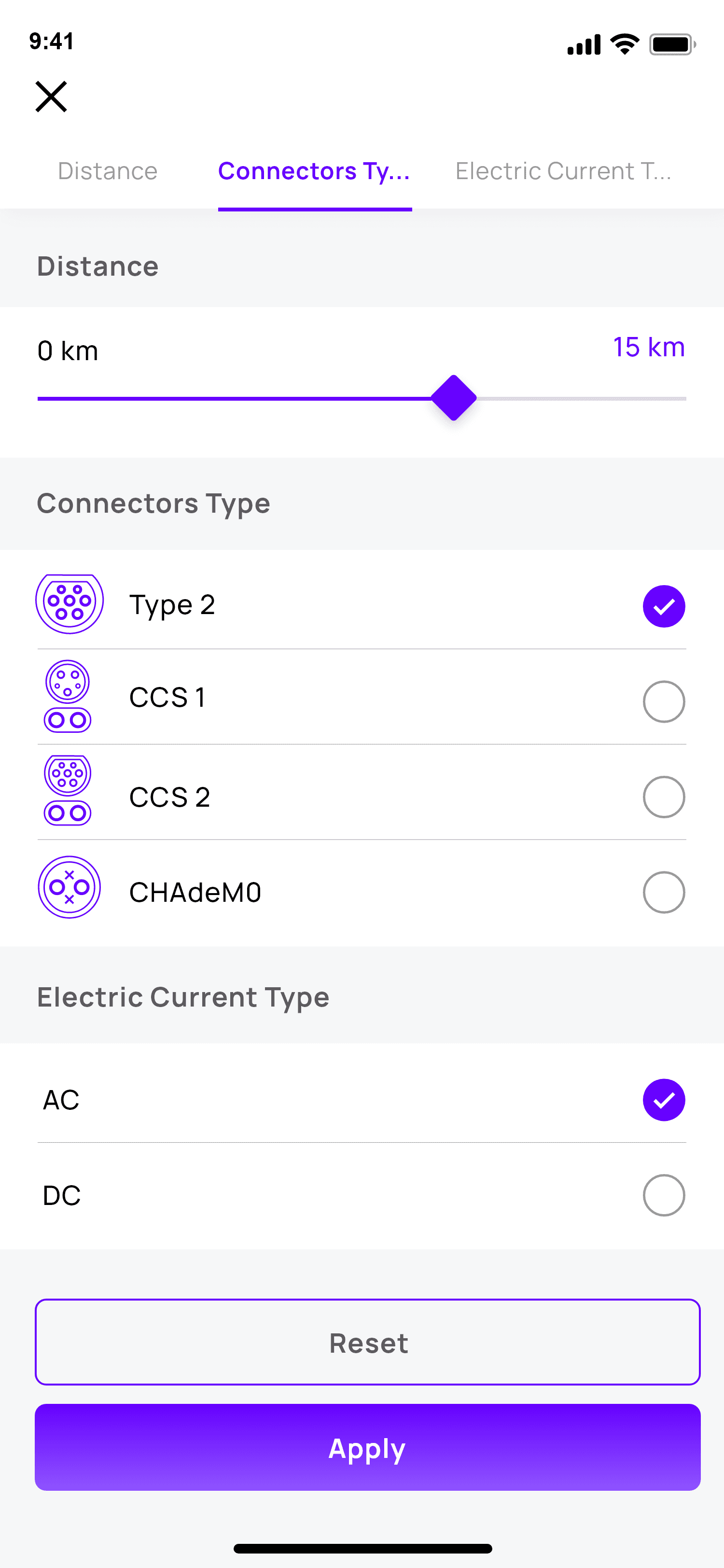
To refine results, users can apply filters such as distance, connector type, and current type, enabling them to quickly narrow down relevant charging options. Selected filters are reflected in real time, ensuring clarity and control over the results displayed.
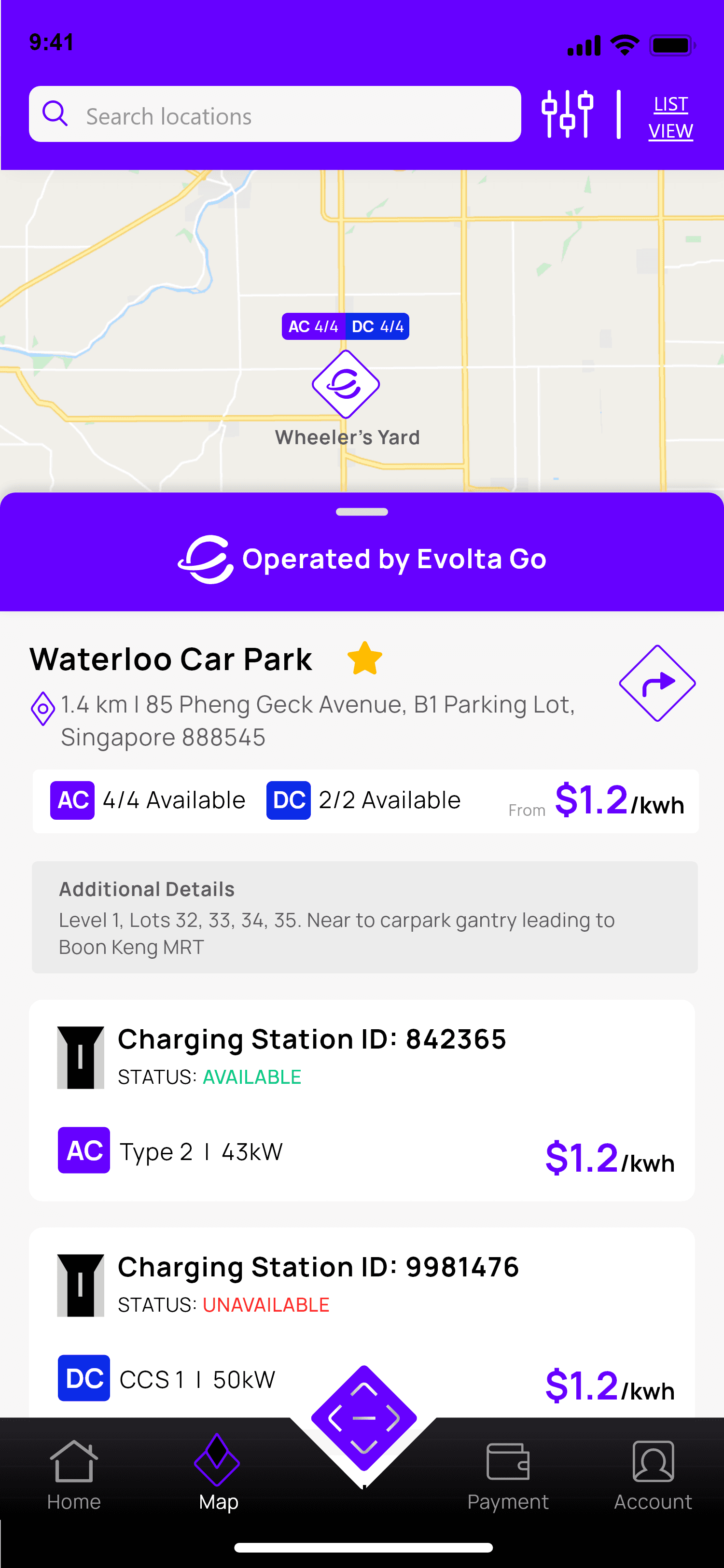
Each station includes a preview panel with key details, such as availability, pricing, and location, allowing users to assess options without leaving the current view. Expanding the panel reveals more detailed information, supporting deeper decision-making before initiating a charging session.
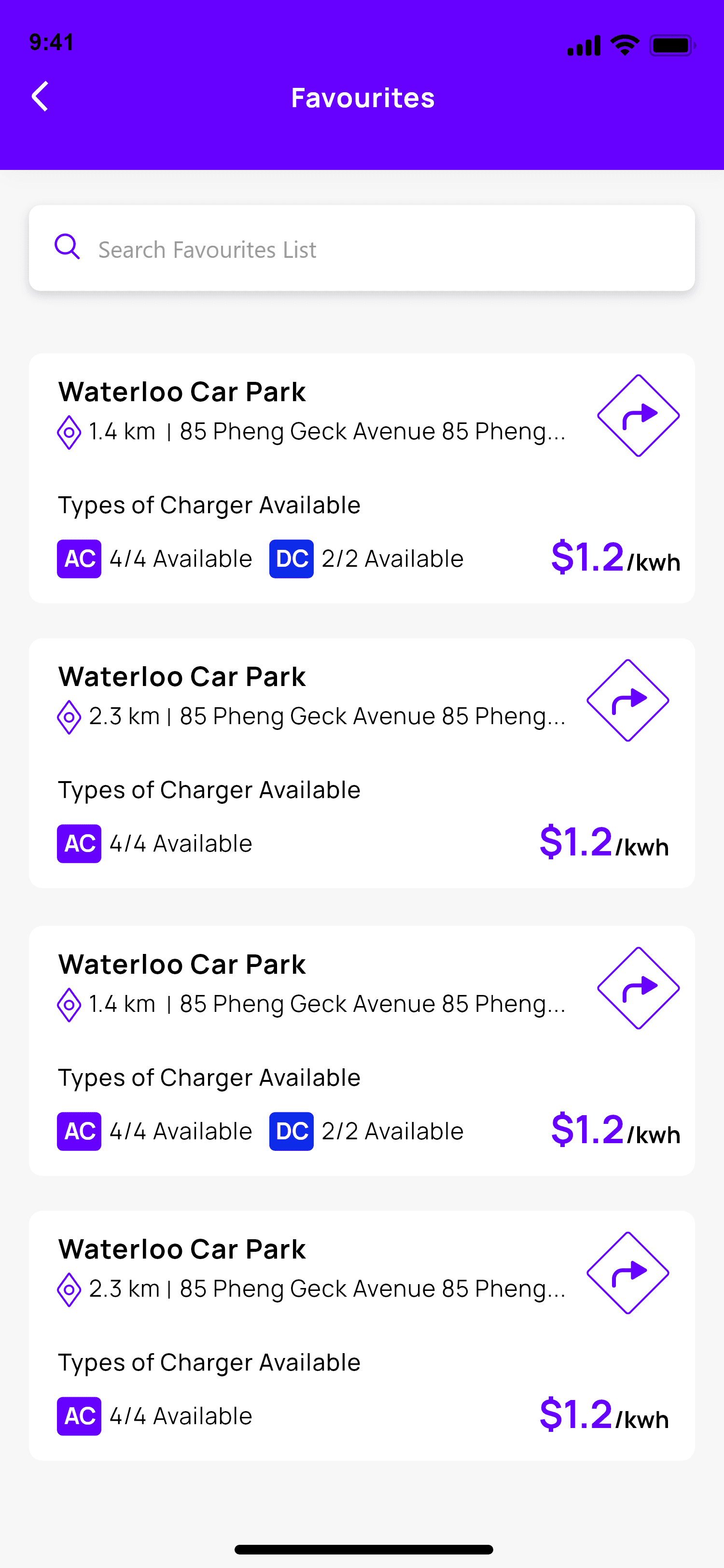
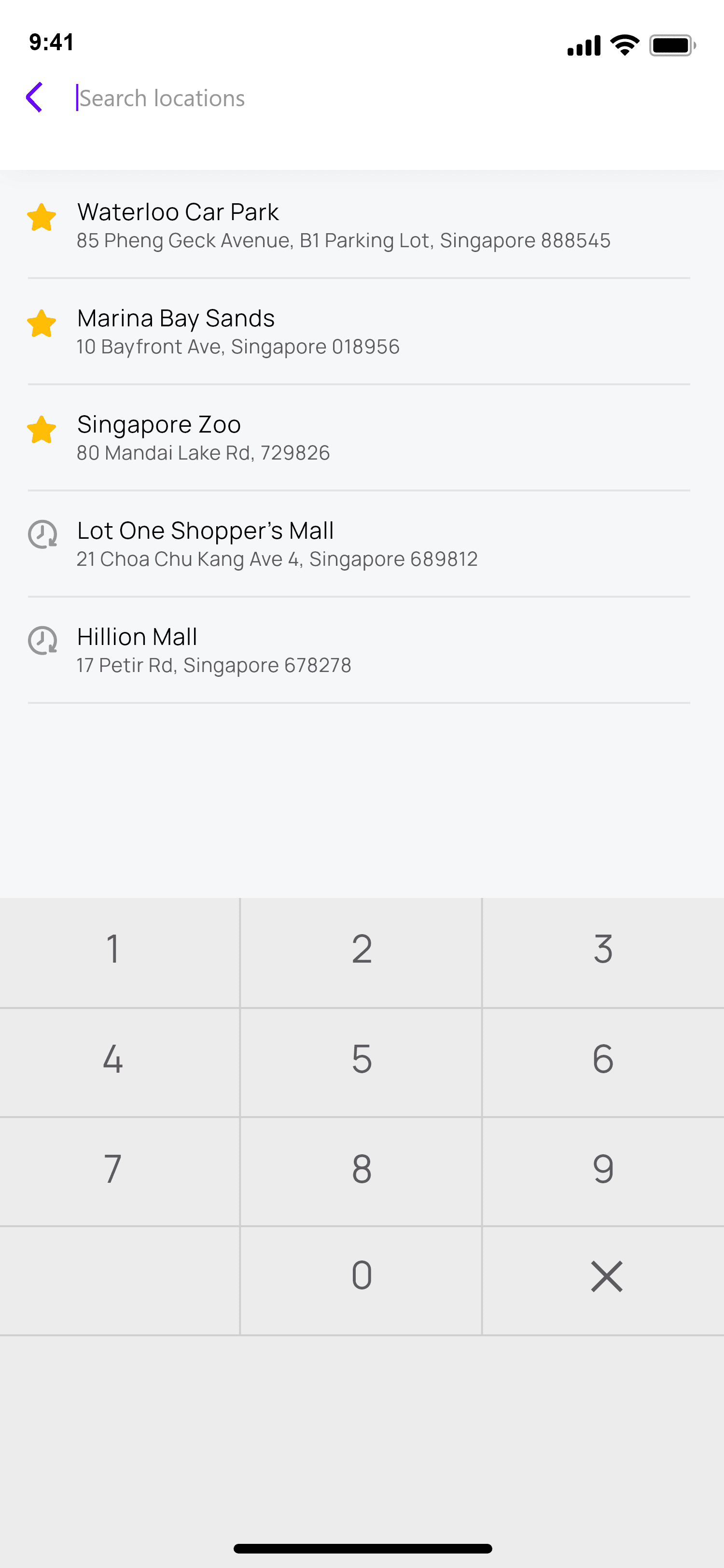
A search function with recent and saved locations further reduces friction, enabling users to quickly access frequently used destinations or find specific locations when needed.
Impact
The project established Evolta Go’s digital presence from an early-stage concept into a cohesive and structured experience across both web and mobile platforms.
The website translates complex EV charging solutions into clear and accessible content, making it easier for users to understand the product offering and its benefits. At the same time, the mobile app design supports key user journeys such as discovering nearby charging stations and managing charging sessions in a more streamlined and intuitive way.
By aligning brand, product, and interface design, the project created a consistent experience across touchpoints, helping Evolta Go communicate its value more effectively while laying a foundation for future product development.
Recognition 🏆
The project was recognised with a Silver Award in Branding for Technology at the Indigo Design Awards (2022), highlighting the strength of the overall brand and digital experience.
Reflection
This project highlighted the importance of designing within a collaborative and evolving environment, where requirements and ownership were shared across the team. Working within defined product flows pushed me to focus on translating requirements into clear and usable interface designs, rather than starting from scratch.
I also gained a deeper understanding of balancing brand expression with usability. While the visual direction aimed to create a strong and modern identity, it was equally important to ensure that key actions such as discovering stations and managing charging sessions remained intuitive and easy to follow.
Looking back, I would explore opportunities to be more involved in early-stage UX processes, such as defining user flows and validating decisions through user testing. This would allow for stronger alignment between product strategy and interface design, and further improve the overall user experience.